
Professional Web Development Services: Building Modern Digital Experiences
In today’s digital-first economy, your website is often the first point of contact between your business and potential customers. Professional web development is the backbone of establishing a credible, functional, and user-friendly online presence. At https://prasad-solutions.com, we understand that web development is not just about writing code; it is about creating a strategic asset that drives growth, streamlines operations, and engages your target audience effectively.
High-quality development goes beyond aesthetic design. It encompasses the technical architecture, backend infrastructure, and front-end interactivity that allow a website to perform reliably under pressure. As businesses scale, the demand for sophisticated web applications that can handle complex data, user authentication, and third-party integrations becomes essential for maintaining a competitive edge in the United States market.
Understanding the Scope of Web Development
Web development is generally categorized into three distinct layers: front-end, back-end, and full-stack development. The front-end is what users interact with directly, consisting of the user interface (UI) and the user experience (UX) elements. This layer is responsible for the visual appeal and responsiveness of your site across different devices, from desktop monitors to mobile smartphones.
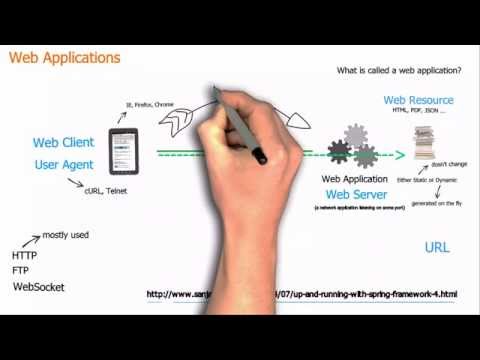
The back-end, or “server-side,” is the engine room of your website. It manages databases, application logic, and the HTTP protocols that facilitate communication between the browser and the server. Without a robust back-end, modern features such as user accounts, secure payment gateways, and content management systems would not be possible. Integrating these two sides requires a deep understanding of modern programming languages and frameworks designed for speed and security.
Key Features of Modern Web Applications
Modern applications require a specific set of features to satisfy contemporary user expectations for speed and functionality. Whether you are launching an e-commerce platform or a B2B SaaS portal, your development project must prioritize core features that add genuine value. Features like real-time data processing, intuitive dashboards, and cross-browser compatibility are no longer optional—they are expected standards.
Beyond these, successful web development projects often incorporate advanced security measures, such as data encryption and regular vulnerability patching. By focusing on these technical pillars during the initial development phase, businesses can avoid common pitfalls like slow load times, data leaks, or fragile database structures that require expensive retrofitting later.
Top Benefits of Investing in Custom Development
Choosing custom web development over generic templates offers significant long-term strategic advantages. First, custom-built solutions are designed specifically to meet your unique business needs. This means you are not paying for unnecessary bloatware or struggling with limitations inherent in out-of-the-box software packages. You have full control over the features, branding, and user journey.
Furthermore, custom development allows for greater scalability and reliability. As your traffic grows and your business model evolves, a custom codebase can be extended and modified to accommodate new requirements. This level of flexibility ensures that your digital infrastructure remains a functional engine for your brand rather than a bottleneck that hinders your growth trajectory.
Important Decision-Making Factors
When selecting a development partner or planning an internal roadmap, several decision-making factors come into play. Your primary objectives should dictate the technology stack choices. For instance, if your platform requires highly interactive elements, React or Vue might be appropriate, whereas a content-heavy site might benefit from a more traditional CMS-based architecture. Aligning technology with your goals is crucial for project success.
| Factor | Consideration |
|---|---|
| Budget | Balance initial development costs against recurring maintenance and scaling requirements. |
| Timeline | Phased modular development can help launch a MVP (Minimum Viable Product) quickly. |
| Integration | Ensure the solution supports necessary APIs for CRM, payment, and analytics platforms. |
| Expertise | Verify that the team has experience in your specific industry compliance requirements. |
Common Use Cases for Web Solutions
Web development serves a wide array of business applications, each requiring a tailored approach. E-commerce platforms, for example, rely on complex inventory management, secure checkout flows, and seamless database management. Meanwhile, service-based businesses often prioritize lead generation, scheduling automation, and clear information architecture to guide users toward a conversion.
Other common use cases include internal enterprise resource planning (ERP) tools, client portals with secure document sharing, and community-driven forums. By identifying your specific use case early, you can focus on the technical capabilities that matter most to your end users and internal stakeholders, ensuring a higher ROI on your development budget.
Setup, Workflow, and Integration
A successful development cycle usually follows a defined workflow: discovery, design, development, testing, and deployment. The discovery phase is arguably the most important, as it involves mapping out the business logic and user requirements. By conducting thorough planning, teams can minimize scope creep and ensure that the final product aligns with organizational goals.
Integration is the final hurdle in making a tool feel “native” to your operations. Integrating with existing systems like Salesforce, Hubspot, or payment processors (like Stripe) requires careful API management. Proper integration allows for automation, reducing manual data entry and improving overall workflow efficiency across your company departments.
Support and Long-Term Reliability
Web development does not end at deployment. Long-term reliability depends heavily on ongoing support, updates, and maintenance. Web standards evolve rapidly, and browsers update their rendering engines frequently. Without a dedicated support plan, your website may start to experience performance degradation, broken links, or security vulnerabilities within a short period after launch.
We recommend establishing a maintainability plan that includes:
- Regular software dependency audits to manage security risks.
- Performance monitoring to track load times and user engagement patterns.
- Periodic backups to ensure data integrity in case of unforeseen server errors.
- Ongoing optimization of the UI/UX based on actual analytics and user feedback.
Choosing the Right Strategy for Your Business
Ultimately, your web development strategy should be dictated by your specific business needs. Whether you are building from scratch or upgrading an legacy system, the priority should remain on developing resilient and user-centric architecture. By focusing on scalability, security, and integration from the outset, you position your organization to thrive in a digital marketplace that rarely stands still.
By partnering with professionals who understand the technical complexity of modern web environments, you remove the burden of maintenance and infrastructure management from your team. This allows you to focus on your core business operations while your digital property works tirelessly to represent your brand and generate value 24/7.
